Why Some Shopify Stores Feel Premium Without Looking Fancy
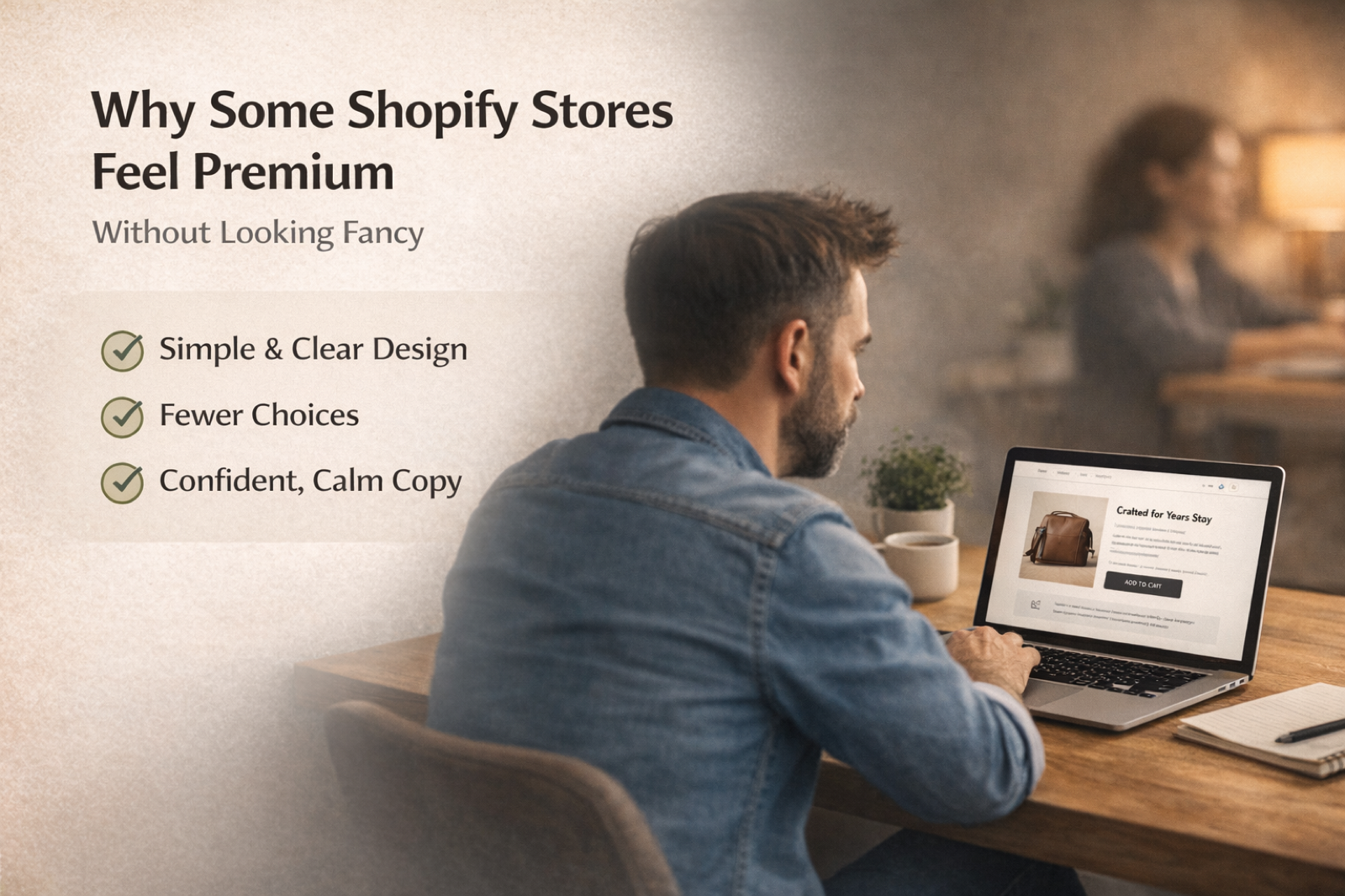
Every merchant has felt this. You open a competitor’s store. There is no dramatic animation. No luxury fonts. No visual theatrics. And yet, somehow, it feels better. More expensive. More confident. More trustworthy.
Not because it looks fancy. But because it feels settled. Many merchants try to solve it with design upgrades, rebrands, or more polish. But premium perception rarely comes from decoration. It comes from restraint.
Premium Is Not Polish. It’s Predictability.
The fastest way a store loses its premium feel is by surprising the buyer in small, unnecessary ways: unexpected layouts, inconsistent copy tone, buttons that behave differently, or policies that feel vague or buried.
Premium stores feel predictable in the best possible way. Not boring — reliable. When a buyer clicks something, they get what they expected. When they scroll, the story unfolds logically. When they hesitate, the page responds calmly.
Predictability reduces cognitive load. And reduced cognitive load feels expensive.
Fewer Choices Signal Confidence
One common pattern in non-premium stores is abundance masquerading as value: too many variants, too many bundles, too many calls to action. Choice is often added with good intentions, but excess choice signals indecision.
Premium stores make fewer options visible and stand firmly behind them. They choose defaults confidently and do not apologize for them. When a store says, “This is what most people choose, and it works,” it removes effort from the buyer. Effortlessness is a core ingredient of perceived quality.
Confident Copy Feels Expensive
There is a clear difference between confident copy and marketing copy. Marketing copy tries to persuade. Confident copy states.
Marketing copy says: Best in class. Industry-leading. Game-changing. Confident copy says: Designed to last years, not seasons.
Premium brands do not over-explain or over-promise. They assume the buyer is intelligent and give them space to decide. This restraint creates trust. And trust elevates perceived value more than any design upgrade.
Calm Stores Convert Better Than Loud Ones
Loud stores feel like they are trying to win attention. Premium stores feel like they already have it. The difference is emotional, not visual.
Calm stores:
- Do not rush the buyer
- Do not repeat the same claim five times
- Do not shout urgency unless it is real
They create an environment where the buyer feels in control. That control translates into comfort. And comfort translates into conversion. People do not associate chaos with quality.
Why This Matters for Merchants Digest
This topic is not about tactics. It is about taste. Most growth content tells merchants what to add. Very little helps them understand what to remove.
Positioning Merchants Digest around clarity, restraint, and buyer psychology signals maturity. It tells merchants this is not another growth-hack newsletter. It is a place to think better about commerce.
How This Fits the Series
These topics form a progression, not a collection.
- First, clarity: Do people immediately understand what you sell?
- Then, trust: Do they feel safe buying from you?
- Then, doubt removal: Are their silent objections resolved?
- Then, perceived quality: Does the store feel worth the price?
Only after these are solved does SEO or AEO meaningfully compound. Traffic amplifies what already exists. It does not fix confusion, distrust, or hesitation.
Premium perception is not a layer you add at the end. It is the outcome of everything being intentionally quiet.
Final Thought
Fancy design can attract attention. But calm design earns belief. The stores that feel premium are not louder, smarter, or more complex. They are simply more sure of themselves. And that certainty is what customers pay for.