Not All Traffic Is Equal: How to Attract Buyers, Not Just Visitors, to Your Shopify Store
Getting traffic feels good.
Sessions go up. Analytics looks active. It feels like progress.
But many Shopify store owners run into the same confusing situation.
Traffic keeps increasing, but sales do not.
This usually leads to one conclusion that feels logical but is often wrong.
“We need more traffic.”
In reality, most stores do not have a traffic problem. They have a traffic quality problem.
Why Traffic Alone Is a Misleading Metric
Traffic is a volume metric. Revenue is an intent outcome.
You can attract thousands of visitors who were never planning to buy anything. That traffic still shows up in analytics, but it does not move the business forward.
This is why two stores with the same number of visitors can have completely different results.
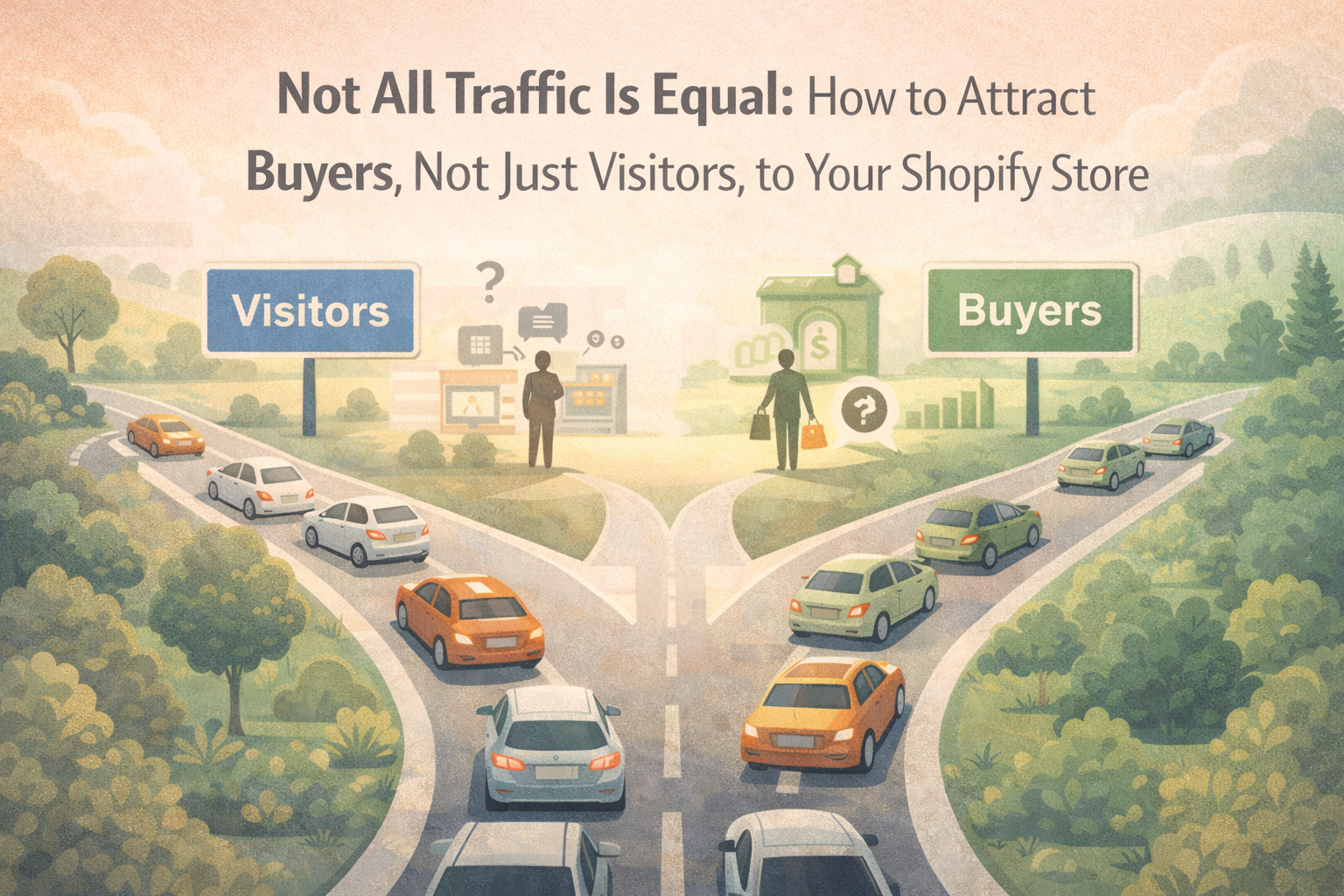
One attracts browsers. The other attracts buyers.
The Difference Between Visitors and Buyers
Visitors arrive curious. Buyers arrive with a problem.
Visitors scroll. Buyers evaluate.
Visitors leave when something feels unclear. Buyers look for reasons to trust and proceed.
The goal is not to eliminate casual traffic entirely. The goal is to increase the share of people who arrive with intent.
Where Low Quality Traffic Usually Comes From
Most low converting traffic comes from one of three places.
- Broad paid targeting
- Vague messaging
- Mismatched landing pages
Ads optimized for clicks or engagement tend to attract people who like to browse, not people ready to purchase.
When ads or content do not clearly state who the product is for, many irrelevant visitors still click.
When the promise that brings someone to the site does not match what they see next, they leave quickly.
None of these mean ads or content are failing. They mean alignment is missing.
How Buyers Actually Find Shopify Stores
Buyers usually arrive in one of these ways.
- They search for a solution to a specific problem.
- They click an ad that clearly matches what they already want.
- They follow a recommendation from someone they trust.
In all three cases, intent exists before the visit starts.
That is the key difference.
The First Step: Be Specific About Who the Store Is For
Stores that convert well are not trying to attract everyone.
They are clear about:
- Who the product helps
- What problem it solves
- When it is not the right fit
Clarity filters traffic automatically.
Some visitors will leave faster. Those who stay are more likely to buy.
Align Ads With Buying Intent, Not Curiosity
If ads focus on clever hooks or vague benefits, traffic quality drops.
What improves buyer traffic:
- Problem specific language
- Clear use cases
- Honest pricing signals
- Real product visuals
When ads qualify users before they click, conversion improves after they arrive.
Use Landing Pages That Continue the Same Story
One of the most common mistakes is sending all traffic to a generic homepage.
Buyers expect continuity.
If an ad mentions a specific problem, the landing page should immediately address that problem.
When the story breaks, intent drops.
Measure the Right Signals
Traffic quality shows up in behavior, not just numbers.
High quality traffic usually has:
- Lower bounce rate
- Longer time on product pages
- Higher add to cart rate
- Fewer random page jumps
These signals matter more than session count.
Why This Matters More Than Ever
Paid traffic is more expensive than it used to be.
Competition is higher. Attention is shorter.
Bringing the wrong people to a store is costly.
Bringing fewer but better matched visitors is far more sustainable.
Final Thought for Shopify Store Owners
Not all traffic helps growth.
Traffic that arrives with intent, clarity, and relevance converts better, costs less over time, and creates healthier businesses.
The goal is not to chase volume.
The goal is to attract people who already want what the store offers.