You’re Getting Traffic. So Why Is Nobody Buying?
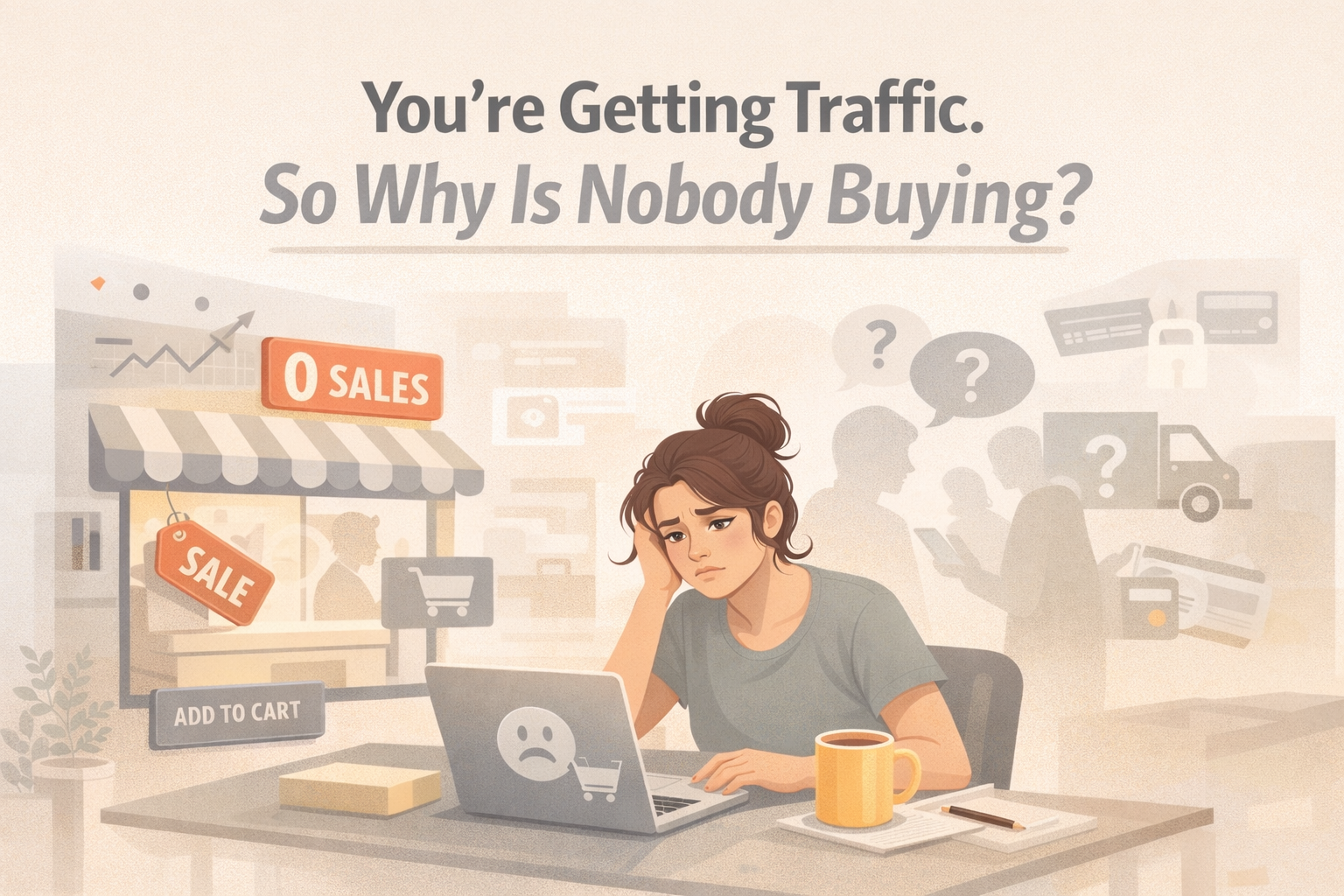
If you have opened Shopify analytics and thought, “People are visiting my store, but nothing is happening.”
You are not alone.
This is one of the most common (and frustrating) phases every Shopify merchant goes through. You do the hard work — run ads, post content, maybe even get influencer traffic — and then… nothing. No orders. No notifications. Just sessions going up and revenue staying flat.
Here is the truth most people avoid saying clearly.
First, Let’s Get One Thing Straight
If your store is getting traffic but no sales, it usually means something on the site is stopping people from feeling confident enough to buy.
It is rarely because Shopify is bad. It is rarely because ads do not work. And it is almost never fixed by simply getting more traffic.
Most of the time, it is a small set of issues stacking on top of each other.
What Visitors Are Really Thinking When They Land on Your Store
Nobody arrives hoping to be converted.
They’re thinking things like:
- Is this store legit?
- Will this actually arrive?
- Is this worth the price?
- What happens if something goes wrong?
If your store does not quietly answer those questions, they leave. Even if they like the product.
That is why stores with worse products but better presentation often sell more.
The Silent Killer: Your Store Does Not Feel Trustworthy Yet
This is not personal. It is behavioral.
Most Shopify stores are first-time encounters. Visitors do not know you and they do not owe you confidence.
Common trust gaps merchants overlook:
- No clear brand story
- Product photos that look like supplier images
- Reviews buried too far down or missing
- Shipping information hidden until checkout
- No obvious way to contact you
Even one of these can cause hesitation. Two or three almost guarantees drop-off.
Trust is not a section on your site. It is a feeling.
Your Product Page Is Either Overwhelming or Under-Explaining
Most merchants spend weeks driving traffic and minutes reviewing their product page. That is backwards.
Your product page has one job.
If someone has to scroll too much to understand what the product does, who it is for, why it is better, or when it arrives, they will not convert.
What consistently works:
- A clear benefit-led headline
- Simple explanations instead of feature dumps
- Social proof near the “Add to Cart” button
- Shipping and returns visible before checkout
- A mobile-first layout that feels effortless
A Hard Truth About Ads: You Might Be Attracting the Wrong People
This one is uncomfortable.
If you’re optimizing ads for:
- clicks
- engagement
- views
You are often paying for curiosity, not intent.
That is why some stores see high traffic, high bounce rates, and zero add-to-carts.
Ads are not broken. They are just bringing people who were never ready to buy.
When the promise in the ad does not match the experience on the page, people leave quickly.
Checkout Is Where Motivation Quietly Disappears
Even interested buyers abandon carts when checkout feels risky or annoying.
The most common issues:
- Surprise shipping costs
- Too many form fields
- No express checkout options
- Payment methods people do not recognize
- Forced account creation
By the time someone reaches checkout, they are already half sold. Do not undo that work.
Simple improvements that matter:
- Enable Shop Pay, Apple Pay, and Google Pay
- Show the total cost earlier
- Remove unnecessary steps
How to Diagnose Your Store Without Overthinking It
Ask yourself honestly:
- Would I trust this store if I had never seen it before?
- Can I understand the product in five seconds?
- Is shipping info obvious?
- Does checkout feel easy on mobile?
- Am I bringing buyers or browsers?
Fix these in order. Not all at once. One layer at a time.
The Biggest Mistake Merchants Make at This Stage
They panic.
They change everything. They install more apps. They launch new ads.
And they never fix the root issue.
Conversion problems do not need chaos. They need clarity.
Final Thought From One Merchant to Another
If your Shopify store is getting traffic but no sales, you’re not failing.
You are just at the trust gap stage. Every real store passes through it.
Fix the experience. Make buying feel safe. Remove friction.
That is when traffic finally starts working for you instead of against you.